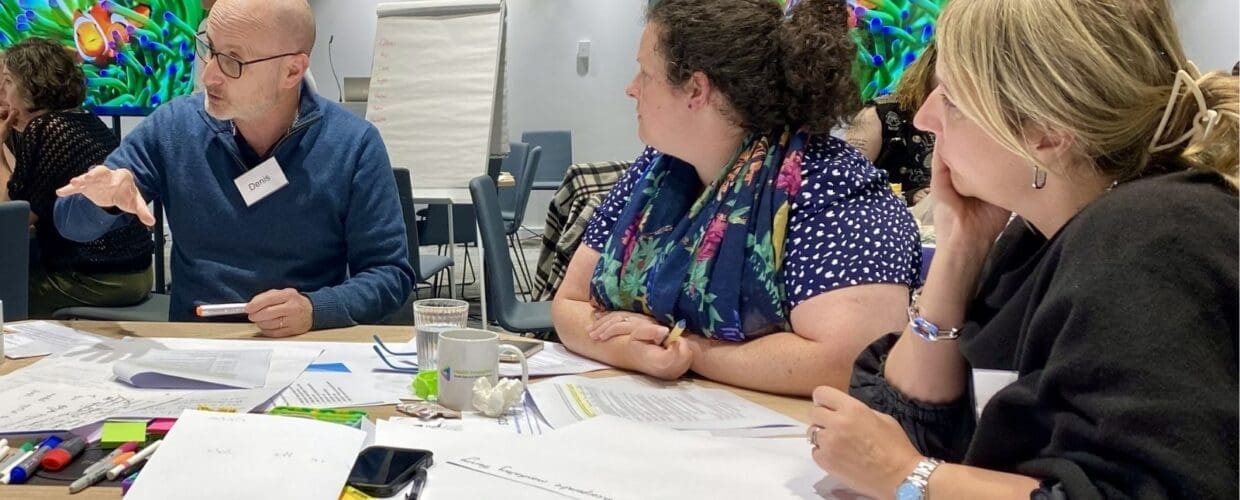
This week our team is joining colleagues at the Pain Management Conference to share a story that has stayed with us, the citizens’ jury on persistent pain we ran with Health Innovation North East and North Cumbria (HI NENC).
At first glance, it was a regional health challenge: some of the highest rates of opioid prescribing in England, particularly in communities already carrying heavy social and economic burdens. Underneath that data we saw something more human, people struggling to manage long-term pain, professionals stretched thin, and a system in need of fresh thinking.
Rather than reaching for another technical fix, HI NENC made a bold choice. They turned to citizens.
We recruited fourteen people from across the region and brought them together for 35 hours of deliberation. Supported by experts, clinicians and people with lived experience, they examined the science of pain, explored the drivers of over-prescription, and imagined what better support could look like. Their six recommendations form the backbone of the region’s pain improvement programme, from a national campaign to tackle stigma, to the creation of local community-based pain hubs.
It shows what can happen when we create the right conditions for participation: time, space, and respect for lived experience. Citizens’ juries are not focus groups or tick-box exercises. They are a democratic act: people learning, listening, challenging and reasoning together to find solutions that are humane and practical.
And this movement is growing. Across the UK, governments and public bodies are increasingly turning to citizens’ juries and citizens’ assemblies to inform complex policy, from climate action to social care, AI regulation, and constitutional reform. The same principles that underpin good democracy, transparency, fairness, and deliberation, are beginning to take root in how we approach public service change.
At a time when the NHS is once again navigating major reform, this approach matters more than ever. Trust is fragile. Public understanding of change is often thin. Yet legitimacy, the belief that decisions are fair, considered, and shaped with rather than for people, is the foundation for successful transformation.
We cannot build that legitimacy through communications alone. We build it through participation. Through processes like this jury, which redistribute power and make space for voices that are too often absent.
The HI NENC Pain Jury reminds us why we at Olovus believe so deeply in this work. When given the chance, people don’t shy away from complexity. They lean into it. They balance compassion with realism. They ask the hard questions. And in doing so, they help create policy that feels grounded in real life, the kind that can actually work.
If we are serious about change in the NHS, this is the future: not consultation after the fact, but deliberation from the start.
If you’d like to find out more about this citizens’ jury or the work Olovus can do to address your system challenges, get in touch with us about putting people at the heart of your approach.
Blog by: Caroline Latta